 XR Custom Jewelry
Why does jewelry turn skin green?
Jewelry turns skin green because copper in the metal reacts with sweat and forms green copper salts that rub off onto the skin. It is a chemical stain, not dirt, and it says one thing about the piece: there is reactive copper at the surface. Some green marks wash off with soap and water. The fix is not a better lotion, it is a better base metal.
Where the green actually comes from
Sweat is salt water with a slightly acidic pH, and it sits against the jewelry for hours. In alloys like brass or bronze, which are built on copper, that salt and acid slowly pull copper ions out of the surface. The ions combine with chloride and carbon dioxide from air and skin, forming green compounds that transfer as a smear on the finger, wrist, or neck. Heat, humidity, and sunscreen speed the reaction up, which is why the same ring can be fine in winter and green your finger in summer.
Costume jewelry usually has a thin flash plating over that copper core. The plating wears through in weeks, the copper underneath meets your skin, and the green mark returns no matter how often you clean the piece.
Why 316L stainless steel does not do this
316L is a surgical-grade steel whose specification contains no copper at all. Its corrosion resistance comes from a chromium oxide layer that forms on the surface and rebuilds itself after every scratch, so sweat never reaches reactive metal. The nickel that 316L does contain is locked inside the alloy matrix, which is why nickel release stays far under the EN 1811 limit and why our 316L line passes the REACH testing we keep on file for buyers. On top of the steel, a PVD finish bonds at the molecular level instead of sitting as a coating layer, so there is no thin plating to wear through and expose anything underneath.
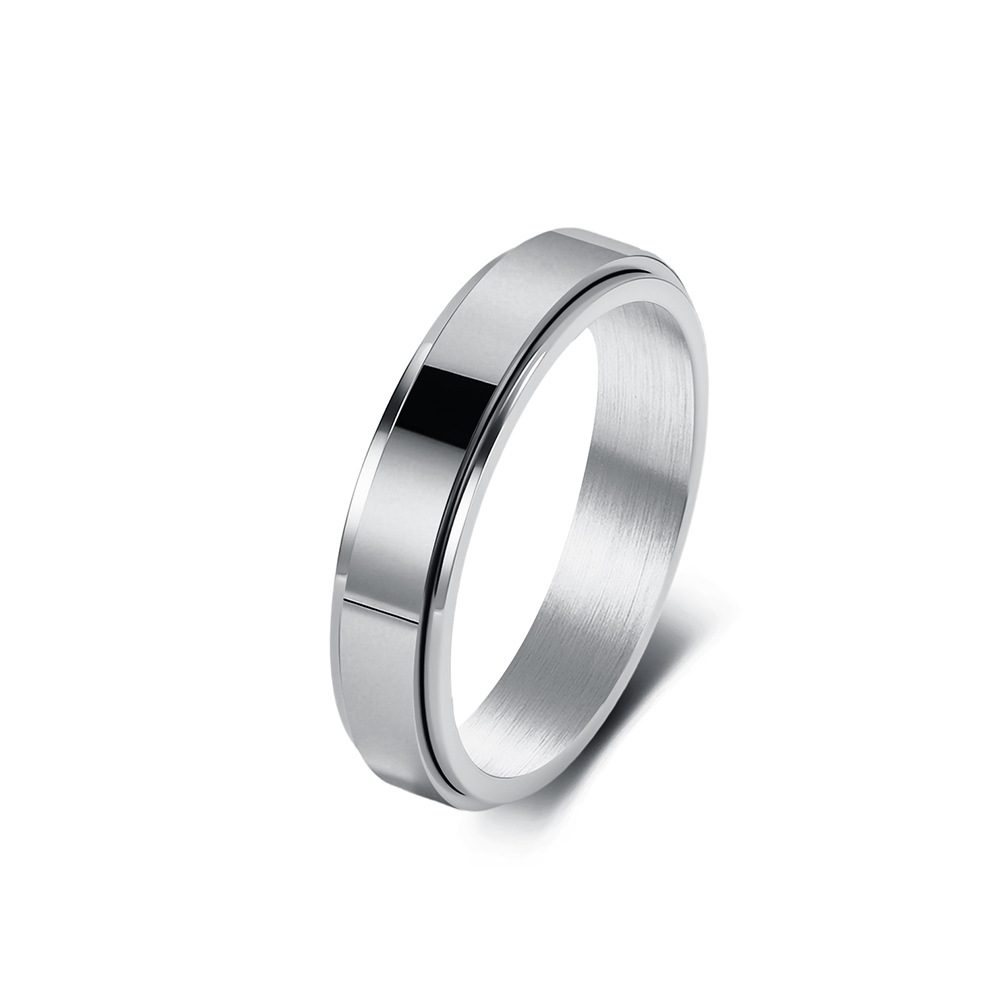
That combination is the whole point of our 316L ring line: rings sit in the wettest, tightest contact of any jewelry category, and a base metal that cannot form copper salts cannot leave a green mark.
Why some "stainless steel" still turns skin green
Buyers run into this when the steel is not actually 316L. Lower grades such as 200-series steel, or a chrome-plated brass core, can corrode or wear through and stain. The words on the listing are free; the metal certificate is not. If a supplier cannot name the grade, treat the price as the tell.
How to check before you order
- Ask for the material by grade: 316L, with a material certificate or test report to back it.
- Ask what the small parts are made of: clasps and jump rings are where cheaper alloys hide.
- Ask for the plating method: PVD, not electroplate, and see our 48-hour salt spray test note for what a pass should look like.
- Do not trust the magnet test alone: genuine 316L can pull slightly on a magnet after forming, so the test rejects good steel as often as bad.
Our compliance page lists the documentation we hold for every plated style, and the quote form is where you can request a sample with the reports attached.
Frequently asked questions
Is the green mark from jewelry harmful?
The stain itself is cosmetic and washes off. A rash or itching under a ring is a different signal and can point to a nickel allergy, which is why base metal grade matters for skin contact. 316L keeps nickel release below the EN 1811 limit, which is the standard EU test for that.
Does 316L stainless steel jewelry turn skin green?
No. 316L contains no copper and its chromium oxide layer keeps sweat from reaching reactive metal, so it cannot form the green copper salts that stain skin. With a PVD finish on top there is no plating layer to wear through either.
Why did my stainless steel necklace turn my neck green?
Most likely the necklace is a lower steel grade or a plated brass core, not 316L. Ask the seller for the grade in writing. If it is 316L with PVD, a green mark would point to a clasp or chain component made of a cheaper alloy, which is exactly the small-part question to raise with the factory.